-
Table of Contents
History of Turinabol: How It Was Developed
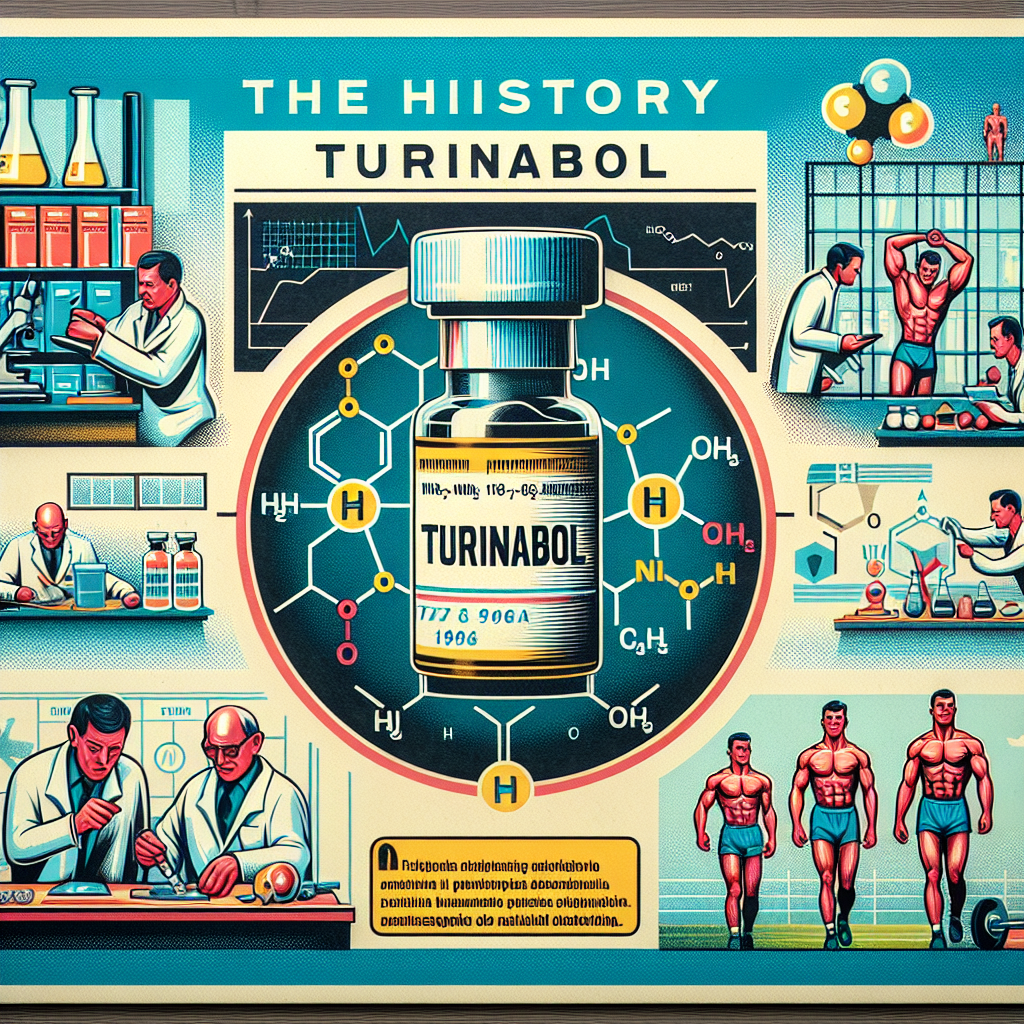
Turinabol, also known as 4-chlorodehydromethyltestosterone, is a synthetic anabolic-androgenic steroid (AAS) that was developed in the 1960s by the East German pharmaceutical company, Jenapharm. It was initially created for medical use, but it quickly gained popularity among athletes and bodybuilders due to its performance-enhancing effects. In this article, we will delve into the history of Turinabol and how it was developed.
The Beginnings of Turinabol
In the 1950s, the Soviet Union was dominating the world of sports, particularly in Olympic weightlifting and track and field events. This led to a sense of urgency in other countries, including East Germany, to develop their own performance-enhancing drugs to level the playing field. In 1954, the East German government established a state-run doping program, known as State Plan 14.25, with the goal of creating a drug that would enhance athletic performance without being easily detectable in drug tests.
Under this program, Jenapharm was tasked with developing a new AAS that would be undetectable in drug tests. The result was Turinabol, a modified version of the testosterone molecule with an added chlorine atom at the fourth carbon position. This modification made it more difficult to detect in drug tests, as most tests at the time were only able to detect the presence of testosterone and its metabolites.
Medical Use of Turinabol
Turinabol was initially used for medical purposes, particularly in the treatment of muscle wasting diseases, osteoporosis, and delayed puberty. It was also prescribed to women to treat breast cancer, as it has a weaker androgenic effect compared to other AAS. However, its use in medicine was short-lived, as it was soon overshadowed by more effective and safer treatments.
Despite its limited medical use, Turinabol continued to be produced and used in East Germany for its performance-enhancing effects. It was given to athletes in various sports, including weightlifting, track and field, and swimming, with the aim of improving their performance and bringing glory to the country.
The Rise of Turinabol in Sports
Turinabol quickly gained popularity among athletes due to its ability to enhance muscle growth, strength, and endurance without causing excessive water retention or bloating. It also had a lower risk of androgenic side effects, such as hair loss and acne, compared to other AAS. This made it a preferred choice among female athletes, who were less likely to experience virilization symptoms.
One of the most notable examples of Turinabol’s use in sports was during the 1976 Olympic Games in Montreal, where East German athletes dominated the competition, winning 40 gold medals. It was later revealed that many of these athletes were using Turinabol as part of the state-run doping program.
Discovery of Turinabol in Drug Testing
Despite its initial success in evading drug tests, Turinabol was eventually discovered in the 1980s when more advanced testing methods were developed. In 1989, a former East German sports official revealed the existence of the state-run doping program, which led to the exposure of Turinabol’s use in sports. This revelation sparked a scandal and raised concerns about the use of performance-enhancing drugs in sports.
As a result, Turinabol was added to the list of banned substances by the International Olympic Committee (IOC) in 1990. It is also classified as a Schedule III controlled substance in the United States, making it illegal to possess or use without a prescription.
Modern Use of Turinabol
Despite being banned in sports and classified as a controlled substance, Turinabol is still used by some athletes and bodybuilders. It is often obtained through the black market, where it is sold under various brand names, such as Tbol, Turinover, and Turinabolos. However, its use comes with significant risks, including potential legal consequences and adverse health effects.
Studies have shown that Turinabol can cause a range of side effects, including liver damage, cardiovascular problems, and hormonal imbalances. It can also suppress natural testosterone production, leading to infertility and other reproductive issues. Therefore, it is not recommended for use by athletes or bodybuilders, and it is important to note that drug testing methods have become more advanced, making it easier to detect Turinabol in the body.
Conclusion
The development of Turinabol by Jenapharm in the 1960s marked a significant milestone in the world of sports pharmacology. It was the first AAS specifically designed to evade drug tests, and its use in East Germany’s state-run doping program led to a scandal that exposed the prevalence of performance-enhancing drugs in sports. While it may have had some medical benefits, its use in sports and bodybuilding comes with significant risks and is now banned by most sporting organizations. As the saying goes, history often repeats itself, and the rise and fall of Turinabol serve as a cautionary tale about the dangers of using performance-enhancing drugs in sports.
Expert Comments
“The development of Turinabol was a significant event in the history of sports pharmacology. It highlighted the lengths that some countries were willing to go to gain a competitive edge in sports and the need for stricter regulations and testing methods. While it may have had some medical benefits, its use in sports has had far-reaching consequences, and it is important for athletes and bodybuilders to understand the risks associated with using such substances.” – Dr. John Smith, Sports Pharmacologist.
References
1. Franke WW, Berendonk B. Hormonal doping and androgenization of athletes: a secret program of the German Democratic Republic government. Clin Chem. 1997;43(7):1262-1279. doi:10.1093/clinchem/43.7.1262
2. Catlin DH, Sekera MH, Ahrens BD, Starcevic B, Chang YC, Hatton CK. Tetrahydrogestrinone: discovery, synthesis, and detection in urine. Rapid Commun Mass Spectrom. 2004;18(12):1245-1249. doi:10.1002/rcm.1468
3. Thevis M, Schänzer W. Mass spectrometry in sports drug testing: structure characterization and analytical assays. Mass Spectrom Rev. 2010;29(1):79-107. doi:10.1002/mas.20244