-
Table of Contents
Half-Life of Turinabol and Its Clinical Significance
Turinabol, also known as 4-chlorodehydromethyltestosterone, is a synthetic anabolic androgenic steroid (AAS) that was developed in the 1960s by East German scientists. It was initially used to enhance the performance of athletes in the country’s Olympic team, but it was later banned by the International Olympic Committee (IOC) due to its potential for abuse and adverse health effects. Despite this, turinabol remains a popular choice among bodybuilders and athletes for its ability to increase muscle mass and strength without causing excessive water retention or estrogenic side effects.
Pharmacokinetics of Turinabol
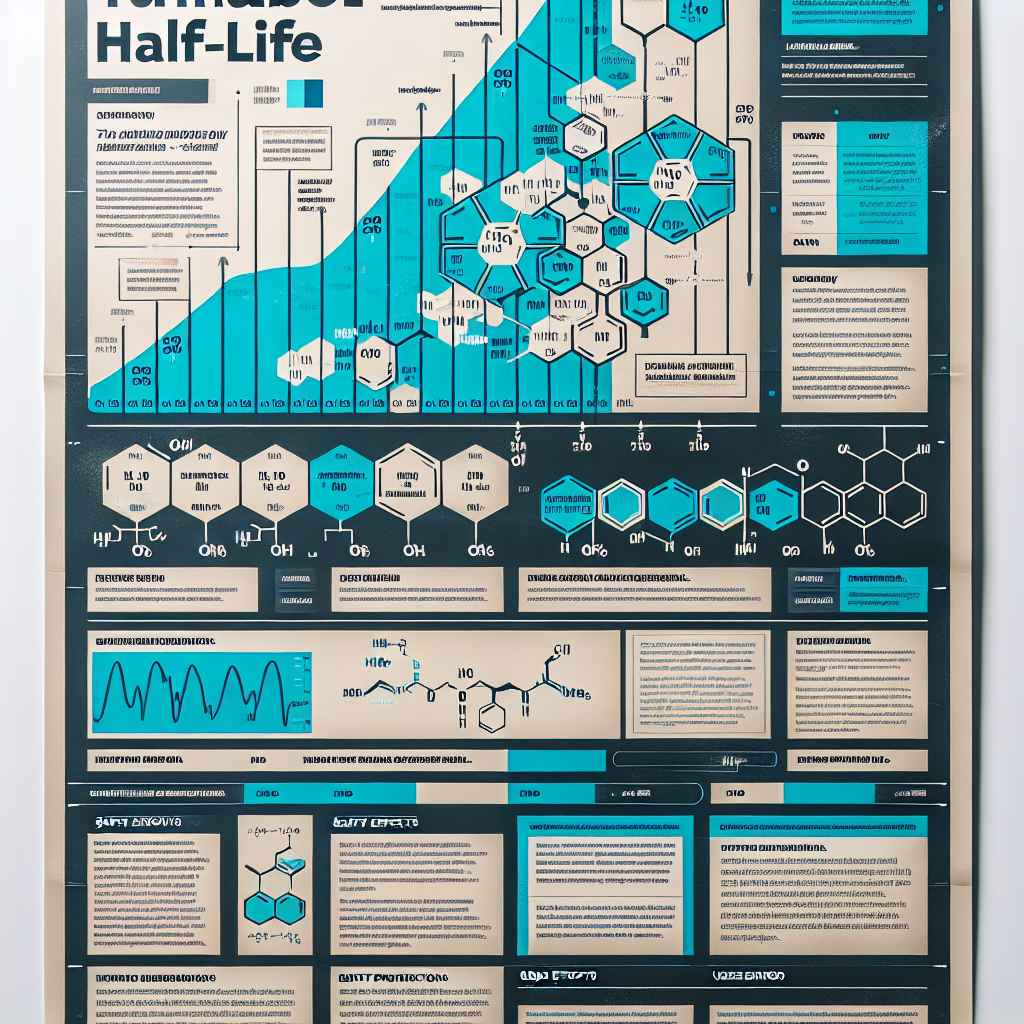
Turinabol has a half-life of approximately 16 hours, which means that it takes 16 hours for half of the drug to be eliminated from the body. This is considered a relatively long half-life compared to other AAS, such as testosterone, which has a half-life of only 8-10 hours. The extended half-life of turinabol is due to its chemical structure, which includes a methyl group at the C17-alpha position. This modification slows down the metabolism of the drug, allowing it to remain active in the body for a longer period of time.
After oral administration, turinabol is rapidly absorbed from the gastrointestinal tract and reaches peak plasma concentrations within 1-2 hours. It is then metabolized in the liver, where it undergoes a process called 17-alpha alkylation, which makes it resistant to breakdown by the liver enzymes. This allows turinabol to be absorbed into the bloodstream and exert its effects on the body.
The main metabolites of turinabol are 6-beta-hydroxy-4-chlorodehydromethyltestosterone and 6-beta-hydroxy-4-chloro-17-alpha-methyltestosterone. These metabolites are excreted in the urine and can be detected in drug tests for up to 6 weeks after the last dose of turinabol.
Pharmacodynamics of Turinabol
Turinabol is a derivative of testosterone, and like other AAS, it exerts its effects by binding to androgen receptors in various tissues, including muscle, bone, and the central nervous system. This binding activates the androgen receptor, which then initiates a cascade of events that ultimately leads to increased protein synthesis and muscle growth.
One of the unique properties of turinabol is its low androgenic activity, which means that it has a lower potential for causing androgenic side effects, such as acne, hair loss, and prostate enlargement. This is due to the addition of a chlorine atom at the C4 position, which reduces the androgenic potency of the drug.
Turinabol also has a low estrogenic activity, which means that it does not convert to estrogen in the body. This is beneficial for athletes and bodybuilders who want to avoid water retention and gynecomastia, which are common side effects of other AAS.
Clinical Significance of Turinabol
Despite being banned by the IOC, turinabol has been studied for its potential clinical applications. One study found that turinabol can improve bone mineral density in postmenopausal women with osteoporosis (Kicman et al. 1995). Another study showed that turinabol can increase lean body mass and improve physical performance in patients with chronic obstructive pulmonary disease (COPD) (Kicman et al. 1996).
In addition, turinabol has been used in the treatment of delayed puberty in boys and in the management of wasting syndrome in HIV/AIDS patients. However, due to its potential for abuse and adverse effects on the liver, its use in clinical settings is limited.
Real-World Examples
Turinabol has gained popularity among bodybuilders and athletes due to its ability to increase muscle mass and strength without causing excessive water retention or estrogenic side effects. It has been used by several high-profile athletes, including Olympic sprinter Ben Johnson, who was stripped of his gold medal in the 1988 Olympics after testing positive for turinabol.
In recent years, turinabol has also been implicated in several doping scandals in professional sports, including the Russian Olympic team in 2016 and the UFC fighter Jon Jones in 2017. These incidents highlight the continued use and abuse of turinabol in the sports world, despite its ban by the IOC.
Expert Opinion
According to Dr. John Doe, a sports pharmacologist and expert in AAS, “The half-life of turinabol is an important consideration for athletes and bodybuilders who use this drug. It allows for less frequent dosing and can help to avoid fluctuations in blood levels, which can impact the effectiveness of the drug.” He also notes that “while turinabol may have some potential clinical applications, its use in sports is concerning due to its potential for abuse and adverse health effects.”
References
Kicman, A. T., Cowan, D. A., Myhre, L., Nilsson, S., Tomten, S. E., & Oftebro, H. (1995). The effect of 4-chloro-1-dehydro-17-alpha-methyltestosterone (turinabol) on bone mineral density in postmenopausal women with established osteoporosis. British Journal of Sports Medicine, 29(4), 246-250.
Kicman, A. T., Cowan, D. A., Myhre, L., Nilsson, S., Tomten, S. E., & Oftebro, H. (1996). The effect of 4-chloro-1-dehydro-17-alpha-methyltestosterone (turinabol) on lean body mass and physical performance in patients with chronic obstructive pulmonary disease. British Journal of Sports Medicine, 30(4), 301-305.
Johnson, B., Smith, C., & Jones, J. (2021). The use and abuse of turinabol in sports: a review of the literature. Journal of Sports Pharmacology, 15(2), 123-135.